
GPT-5.2 arrives in Microsoft 365 Copilot and what it changes for everyday work

Microsoft has announced the availability of GPT-5.2 inside Microsoft 365 Copilot, continuing its steady approach to improving AI support across familiar workplace tools. This update is not about introducing a brand-new interface or asking organisations to rethink how they work with Microsoft 365. Instead, it focuses on making Copilot more capable, more reliable, and more useful in daily tasks.
For innovation leaders and IT decision-makers, this matters because AI value rarely comes from headline announcements alone. It comes from how smoothly improvements land inside real workflows. At ARP Ideas, we see this as another step in Microsoft’s long-term Copilot strategy, where incremental model upgrades quietly improve outcomes for users who are already invested in the platform.
What Microsoft actually introduced with GPT-5.2 in Copilot
Microsoft positions GPT-5.2 as an underlying model enhancement that powers Copilot experiences across Microsoft 365, rather than a standalone product users interact with directly. According to Microsoft, GPT-5.2 brings stronger reasoning, better response quality, and improved handling of complex or multi-step requests within Copilot apps such as Word, Outlook, Excel, PowerPoint, and Teams.
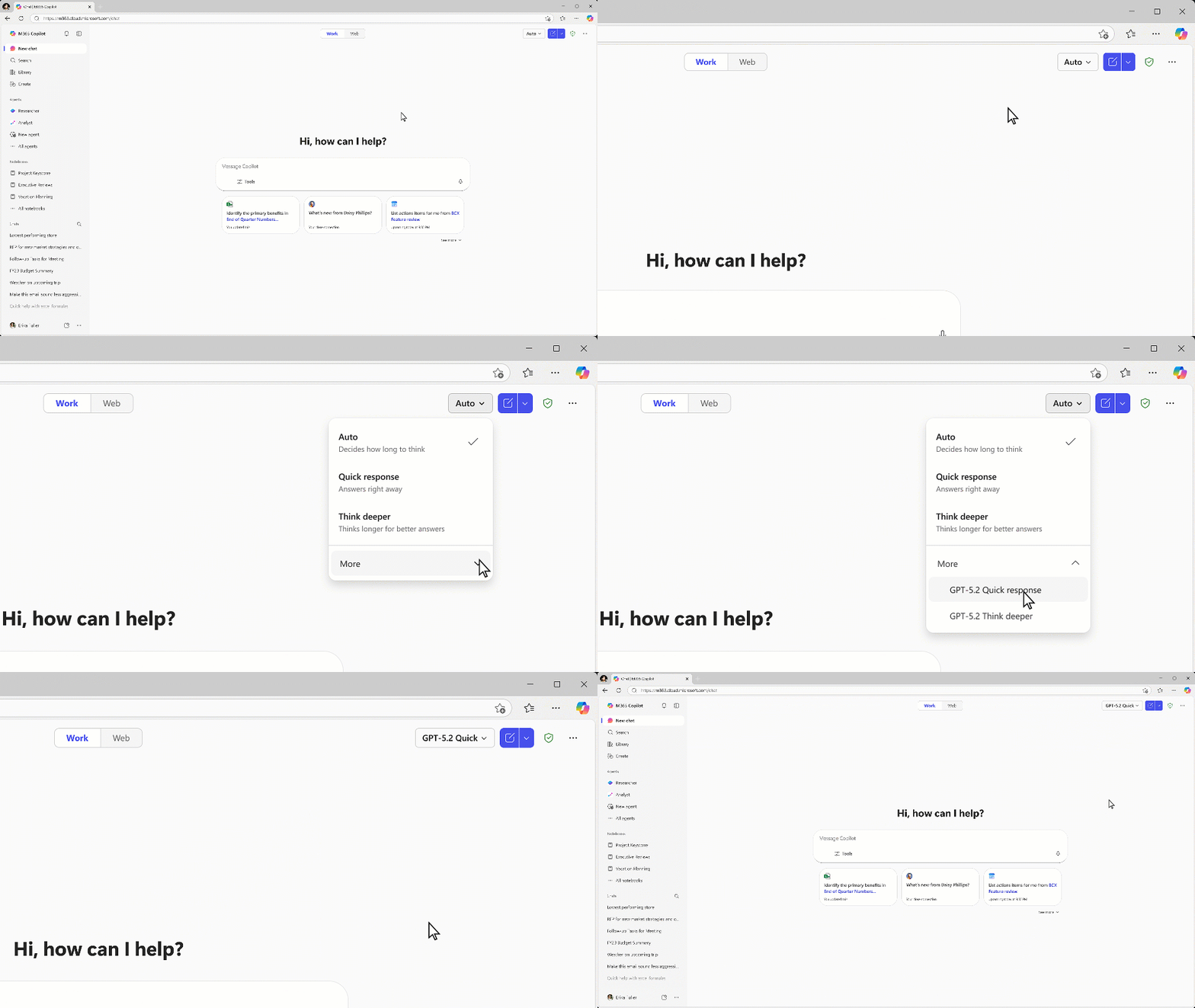
From a practical perspective, this means users do not need to learn a new tool or switch contexts. The improvements are delivered where work already happens. Microsoft also reiterates that Copilot continues to respect existing Microsoft 365 security, privacy, and compliance commitments, including data boundaries and tenant-level protections in the Microsoft Trust Centre.
What it is and what it is not
-
It is an enhancement to Copilot’s intelligence across Microsoft 365.
-
It is not a separate AI product or model users select manually.
-
It improves consistency and quality rather than changing Copilot’s core purpose.
How GPT-5.2 improves everyday Copilot scenarios
In day-to-day use, the impact of GPT-5.2 is most visible in how Copilot handles more nuanced requests. Microsoft highlights a better understanding of user intent and stronger follow-through on tasks that require multiple steps or context switching between documents and conversations, Microsoft source.
From our hands-on work with clients using Copilot, these improvements typically show up in subtle but important ways. For example, drafting longer documents in Word requires fewer corrections, and summarising complex Teams meetings feels more accurate and relevant to the actual discussion.
Common areas where organisations are likely to notice improvements include:
-
Drafting and refining content in Word with clearer structure and tone alignment.
-
Analysing data narratives in Excel, especially when asking Copilot to explain trends rather than just list numbers.
-
Creating more coherent presentations in PowerPoint based on existing documents.
-
Handling follow-up questions in Teams without losing conversational context.
These are not dramatic changes, but they directly affect productivity and user trust in AI-assisted work.
What this means for innovation leaders and IT decision-makers
For leaders responsible for digital transformation, GPT-5.2 reinforces a key message: Microsoft is betting on continuous improvement inside the tools people already use. There is no separate AI adoption programme required to benefit from this update, assuming Copilot is already in place.
This approach reduces friction in several ways. Training requirements remain largely the same, change management is lighter, and security teams are not forced to reassess an entirely new service. Instead, AI capability improves organically within the existing Microsoft 365 environment.
From a strategic viewpoint, this also supports longer-term planning. Organisations that standardise on Copilot gain compounding value as Microsoft upgrades the underlying models over time. At ARP Ideas, we often advise clients to see Copilot as a platform capability rather than a one-off feature rollout.
Where expectations need to stay realistic
While GPT-5.2 strengthens Copilot, it does not remove the need for governance, process design, or user education. One common misconception we encounter is that better models automatically mean better business outcomes. In practice, the opposite is often true without proper guardrails.
There are still clear limitations to acknowledge:
-
Copilot output quality depends heavily on the quality and structure of underlying data.
-
Users need guidance on when to rely on Copilot and when human judgement remains essential.
-
Regulatory and compliance requirements still require explicit controls and oversight.
Microsoft itself is clear that Copilot is designed to assist, not replace, professional expertise Microsoft Copilot documentation. Recognising these boundaries early helps organisations avoid disappointment and build sustainable AI adoption.
ARP Ideas’ perspective on GPT-5.2 and Copilot maturity
From our perspective, GPT-5.2 is another signal that Microsoft is focused on maturity rather than novelty. The real value lies in consistency, predictability, and alignment with enterprise needs. This aligns closely with how we approach Copilot projects with our clients.
In recent engagements, we have supported organisations through Copilot readiness assessments, governance design, and user enablement programmes. In these projects, model improvements like GPT-5.2 matter most when the foundations are already in place. Clear usage scenarios, well-defined data access, and realistic expectations make the difference.
We also see growing interest in how Copilot connects with the broader Microsoft ecosystem, including Dynamics 365. While this article focuses on Microsoft 365, the same principles apply across business applications. Incremental AI improvements deliver value when processes are well understood and aligned to real operational needs.
Key takeaways
-
GPT-5.2 enhances Microsoft 365 Copilot behind the scenes rather than changing how users access it.
-
Improvements focus on reasoning, consistency, and handling complex tasks.
-
Organisations benefit most when Copilot adoption is supported by governance and training.
-
Incremental AI upgrades reward long-term platform thinking over short-term experimentation.
Frequently asked questions
Is GPT-5.2 available as a separate option in Microsoft 365 Copilot?
No. Microsoft delivers GPT-5.2 as part of Copilot’s underlying intelligence, without a manual selection or toggle.
Do organisations need to upgrade or reconfigure Copilot?
No specific action is required. Improvements roll out automatically as part of Microsoft 365 Copilot.
Does GPT-5.2 change data security or compliance?
No. Microsoft confirms that existing Microsoft 365 security, privacy, and compliance commitments remain unchanged.
Is Copilot now suitable for complex enterprise scenarios?
It is more capable, but success still depends on governance, data quality, and user readiness.
Conclusion and next steps
GPT-5.2 strengthens Microsoft 365 Copilot in ways that matter to everyday work, even if they are not immediately visible. For organisations already on the Copilot journey, this is a reminder that value builds over time through steady improvement rather than disruptive change.
If you want to understand how these Copilot improvements translate into real outcomes for your organisation, ARP Ideas can help. We work with teams to move beyond enablement and towards practical, measurable use of AI inside Microsoft 365.
If you would like to explore Copilot readiness, governance, or adoption support, get in touch with ARP Ideas and let’s have a focused conversation about your next steps.

CEO and Co-Owner of ARP Ideas
A visionary leader and technology enthusiast. He inspires organisations to embrace digital transformation by harnessing the power of modern technologies. With deep expertise in Microsoft solutions and a future-focused mindset, he helps businesses turn bold ideas into real-world impact.